Approaching a convoluted junction outside the pretty Tyrhhenian town of Pizzo, it seemed another classic highway engineer’s prank, complicated for the sake of being complicated. My phone on my lap, I followed the moving map with success on a pair of quick turns and felt my chest swell—three weeks of circling Calabria by Peugeot had brought me to new heights as a competent, adult driver, I thought to myself as I merged with an access road, one narrow lane, hemmed in tightly by an iron railing.
I crushed the brake, panicked. The big truck now bounding toward me from the opposite direction braked too, and a three-point turn later there were several more cars behind it, slowing to a halt, a couple more cars after the full five-point turn was complete. On my way again, I marveled that there there wasn’t a honk, not a one. Just maybe, I thought, minutes later and back on the stradale statale, where the Peugeot’s console read 90 and the limit on my phone read 50 (I split the difference): nobody honked because they live here. They know. This isn’t the ordered north. We’re in Calabria. Without a honk, another car zipped around me at 100 or more, then a sign announced 70 was the limit for this particular stretch of the highway, dotted with signs for speed traps, either broken or additional pranks. I ignored my phone and carried on north toward the open Piana di Lamezia, having wrapped up a grand, nearly 2,000km circumambulation of Italy’s toe.
I’d come to Calabria on a guidebook assignment: a brand new title on a region I’d long found beguiling but had hardly enjoyed the chance to get under its skin before. In my years of returning to Campania, Puglia and Sicily, I’d done little more than transit through, but the intrigue had aged, the allure of a supposedly benighted stretch of misty, micro-mountain ranges, so long under the boot of its neighbors, orbiting the control of Rome, Palermo, or Naples—near enough to be claimed, but far enough to keep its distinctive edge—or edges, rather.
As I put it toward the start of the book:
“There is no one essence here. ‘Collapsed together’ [in the words of Guido Piovene] in Calabria are tectonic fault zones, starkly contrasting massifs, two separate stretches of coast, sheer karst canyons and misty forests of primeval pines, along with sun-bleached groves of olives, figs and bergamots. In geographical terms, it’s closer to Africa than Italy’s North, yet its Sila plateau is the great ‘North of the South’. Long perceived as the ‘third island’ of Italy for its remoteness, it served for much longer as a regional crossroads, the ancient cradle of the philosophy, mathematics, and art of Magna Graecia (Greater Greece). A true Mediterranean medley at the axis of the great inland sea, Calabria’s diversity of peoples and cultures shouldn’t surprise, its conquerors having left their traces from each of its corners.”
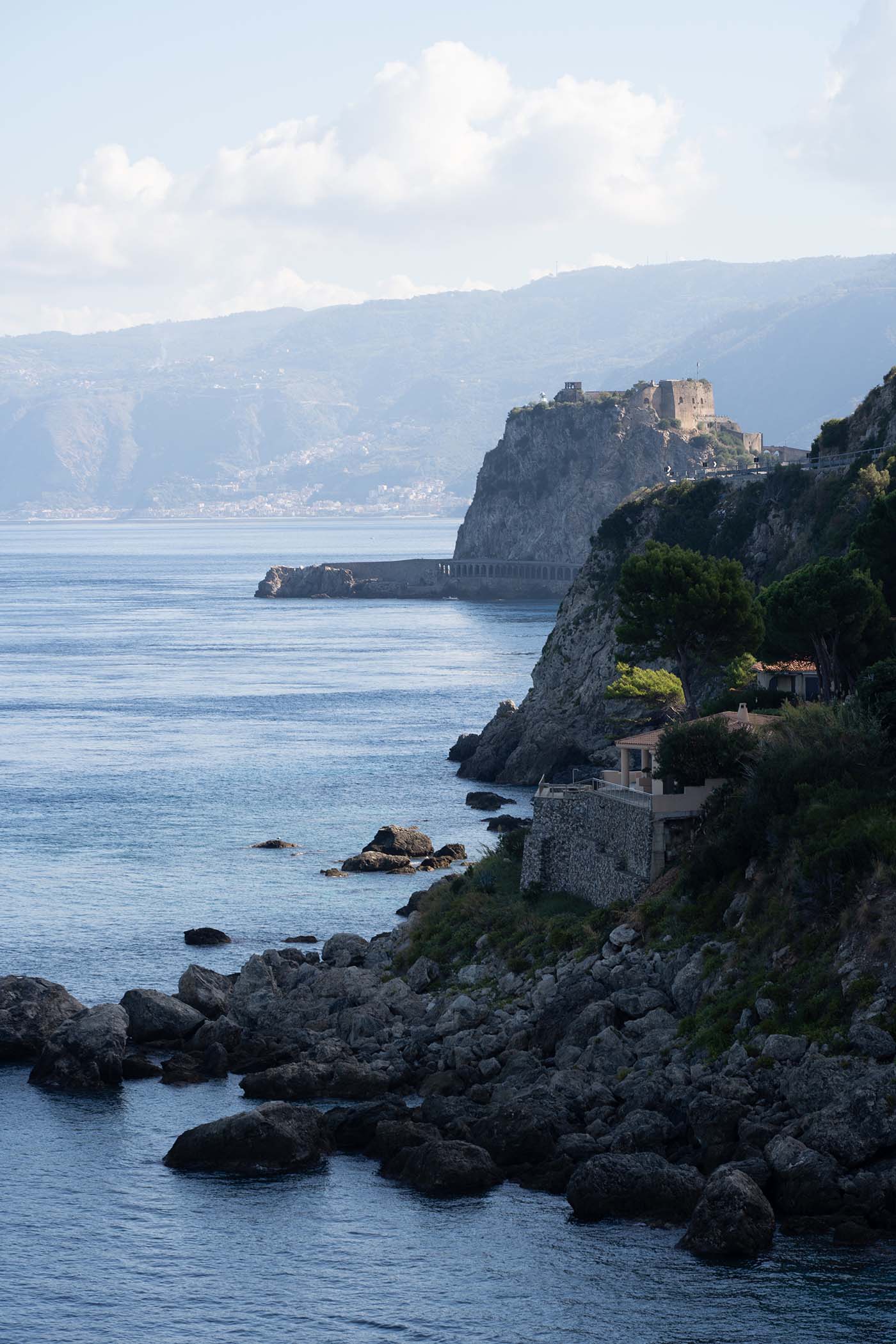
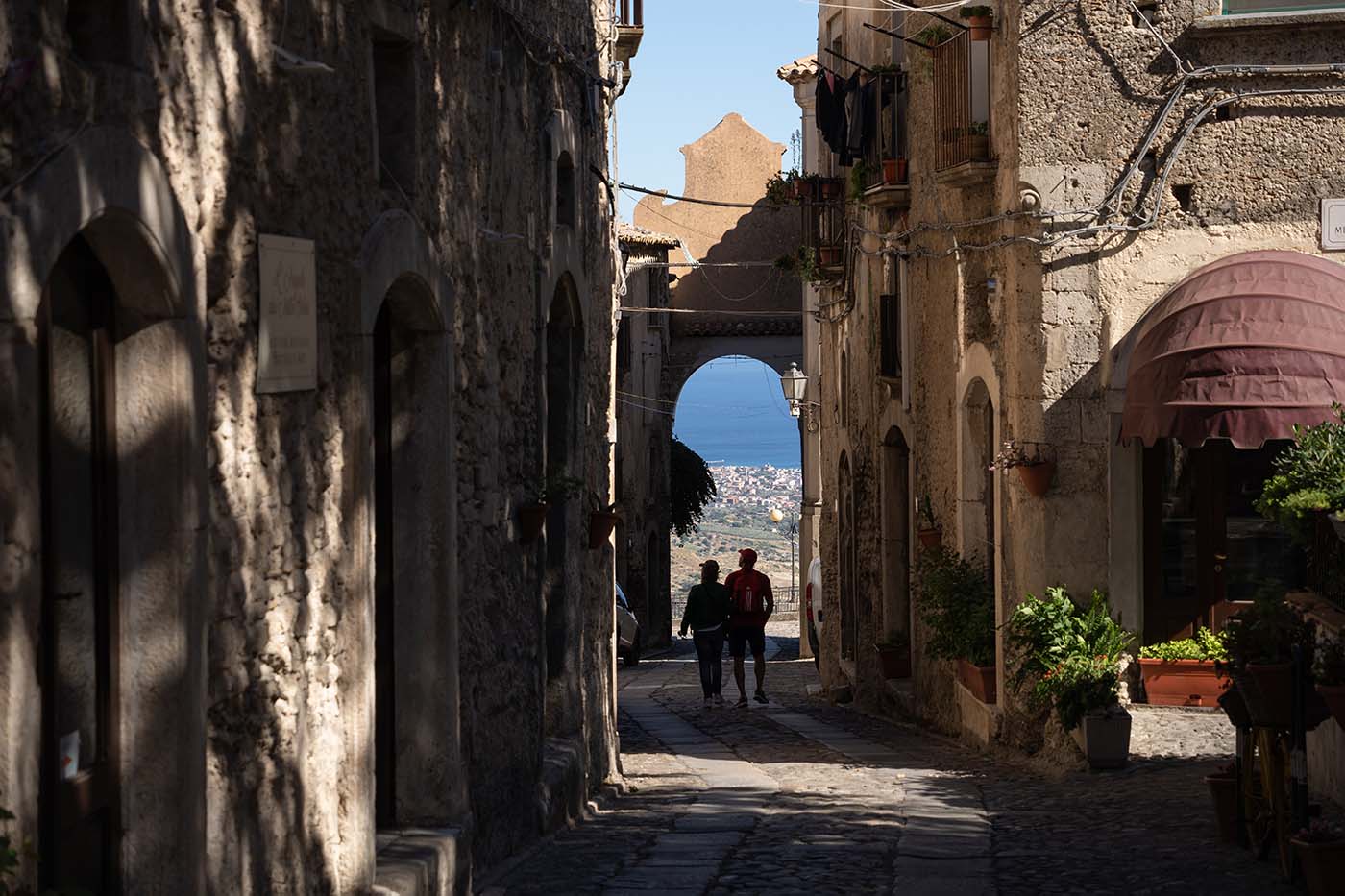
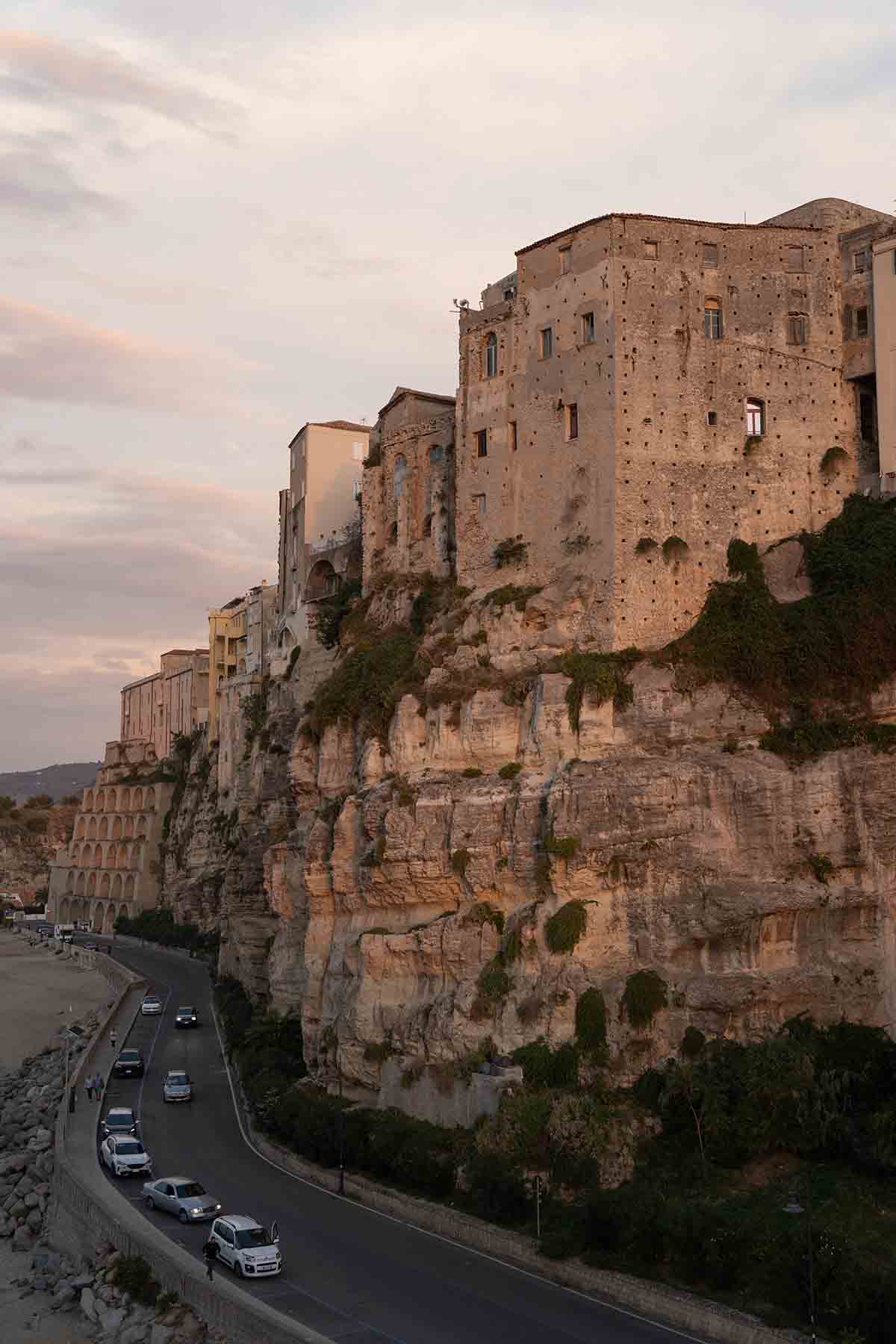
And indeed, making my way up the SS18 along Calabria’s Tyrrhenian coast, squeezed by the slopes of the Serre Cosentine, a new set of ruins appeared around every bend: hulking Norman castles, some on Roman foundations, some held by Arabs in the 8th and 9th centuries then reconquered, Spanish watchtowers built as bastions against Ottoman corsair. Today, they overlook a long stretch of lowkey resorts, swelling in summers with Italian tourists. But a trickle of Northern European tourists have begun arriving as well. As of now, they almost exclusively stick to the handful of the coastal resorts, but I don’t doubt that that will soon change:
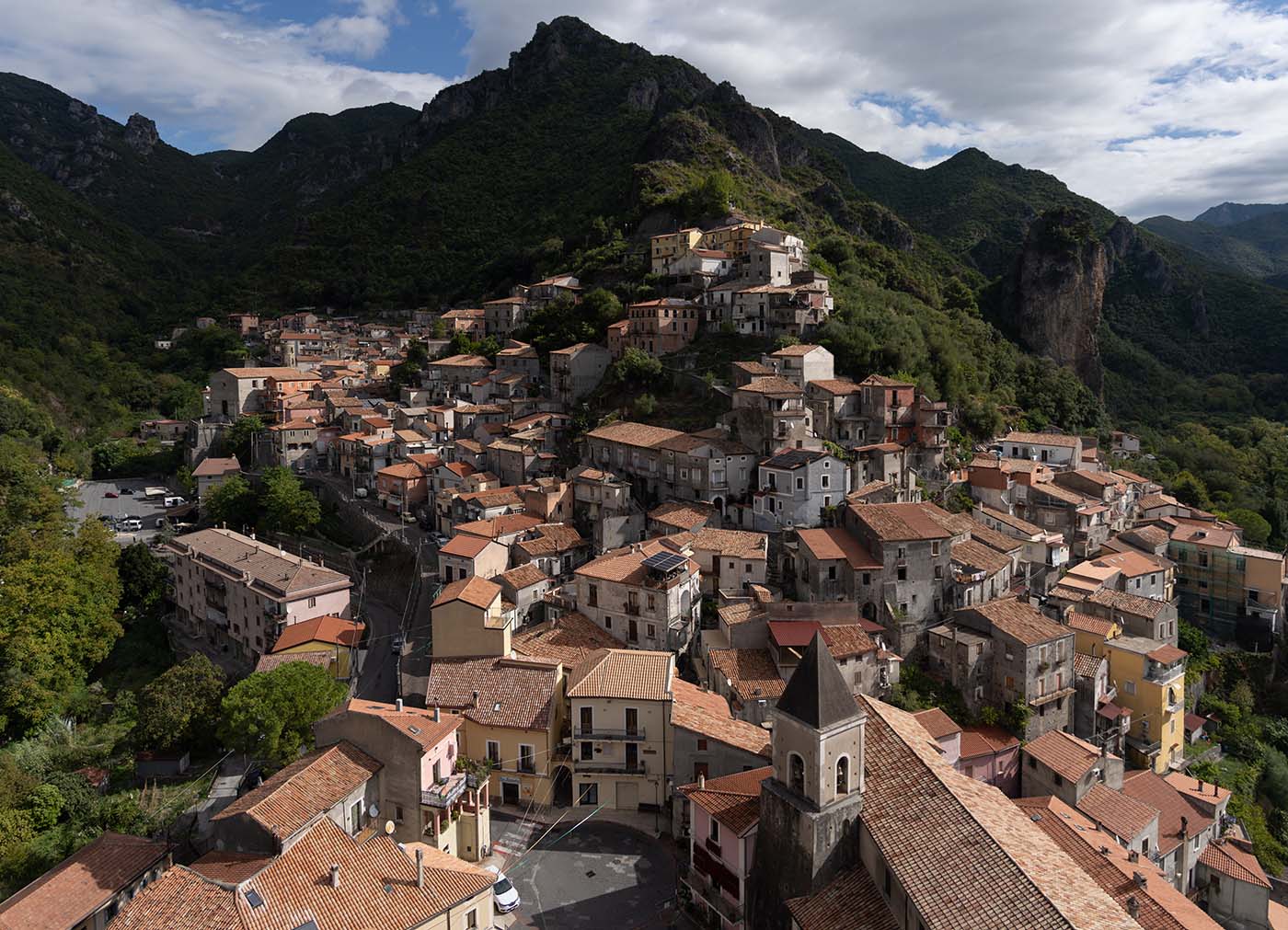
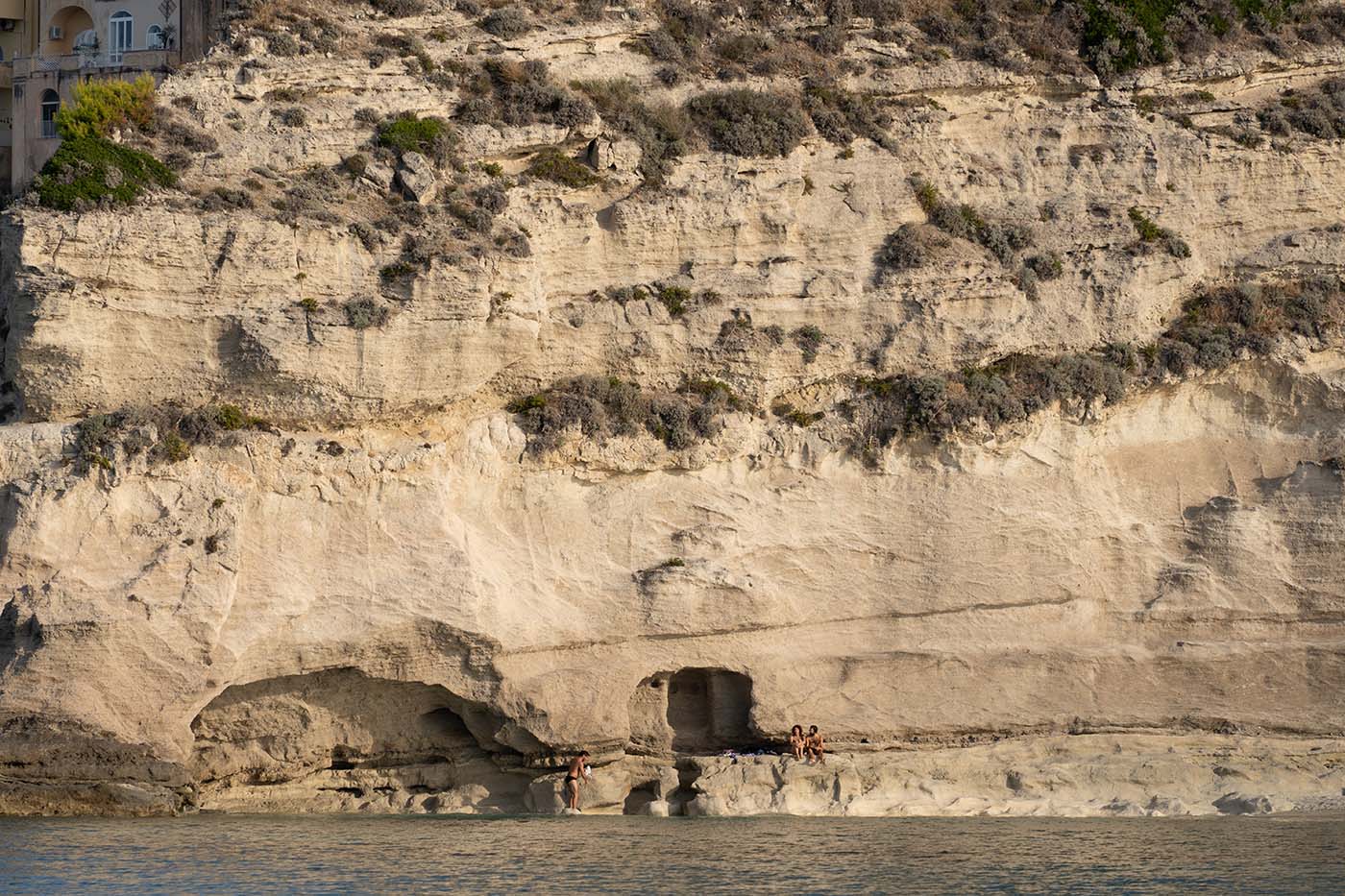
“While retaining its almost otherworldly allure, long gone are the days of Calabria’s remoteness and isolation, swept away by high-speed rail, direct flights and the A2 motorway, slicing its way along roughly the route once traced by the ancient Roman road. It’s better connected to the world than ever, its manifold beauty within tantalizing reach: from half-buried ruins amid citrus orchards to rustic cuisine and full-bodied wines, and a generous sprinkling of the steep-rising villages that so enraptured a young M.C. Escher. Not least is the bewitching beauty of its cliff-set coastal towns like Scilla and Tropea, the former founded by Odyssean sea monster Scylla and the latter by Hercules himself, the jewel of the so-called Costa degli Dei (Coast of the Gods), rivaling even the Amalfi for scenery – though with a fraction of the crowds. Author Norman Douglas remarked of Calabria in the early 20th century that ‘travellers, as a rule, avoid it.’ Today, a quarter through the 21st, this remains quite apt in describing one key to Calabria’s charms. When it comes to tourism, it happily remains as Italy’s last frontier….”
The Crypt of Sottera
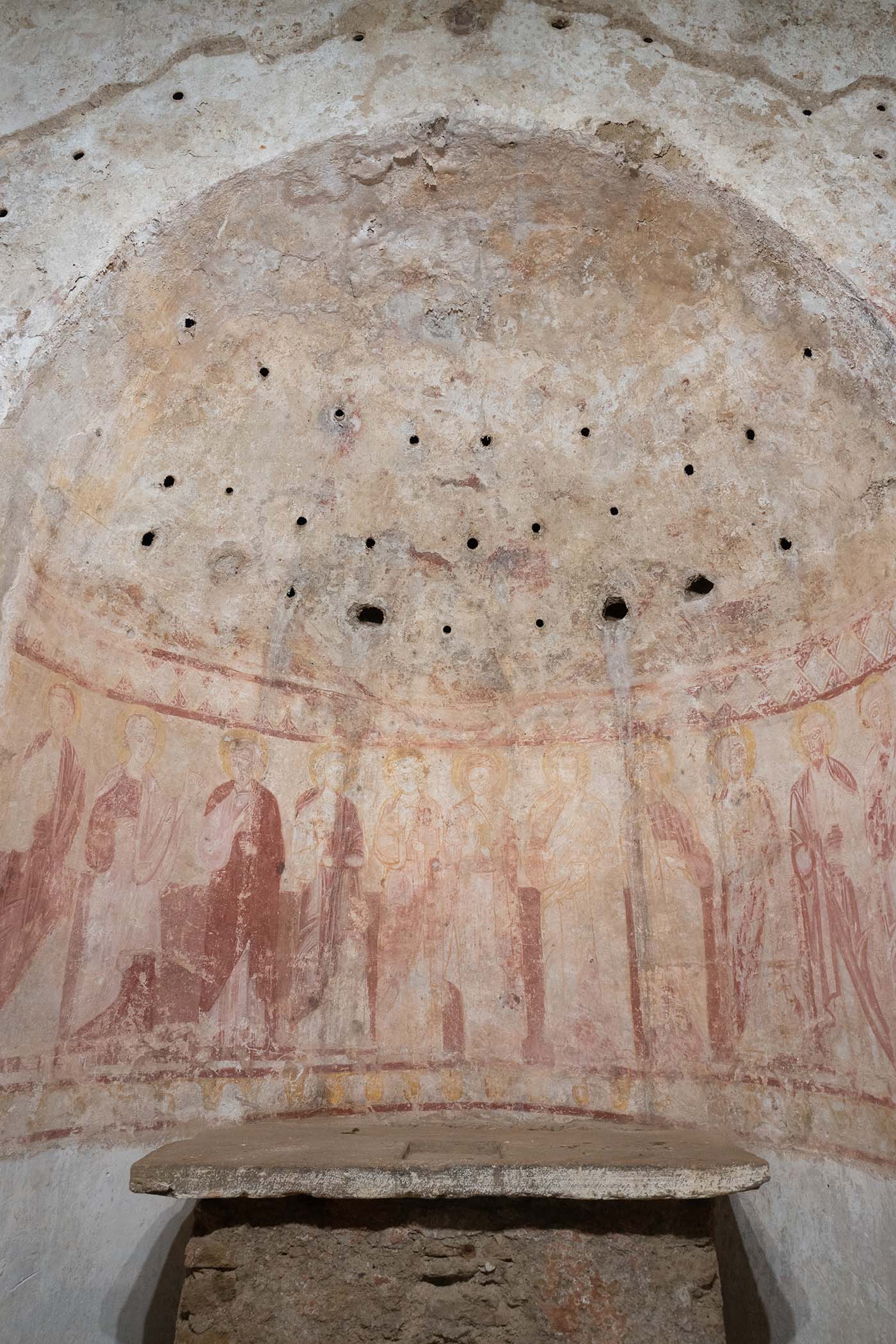
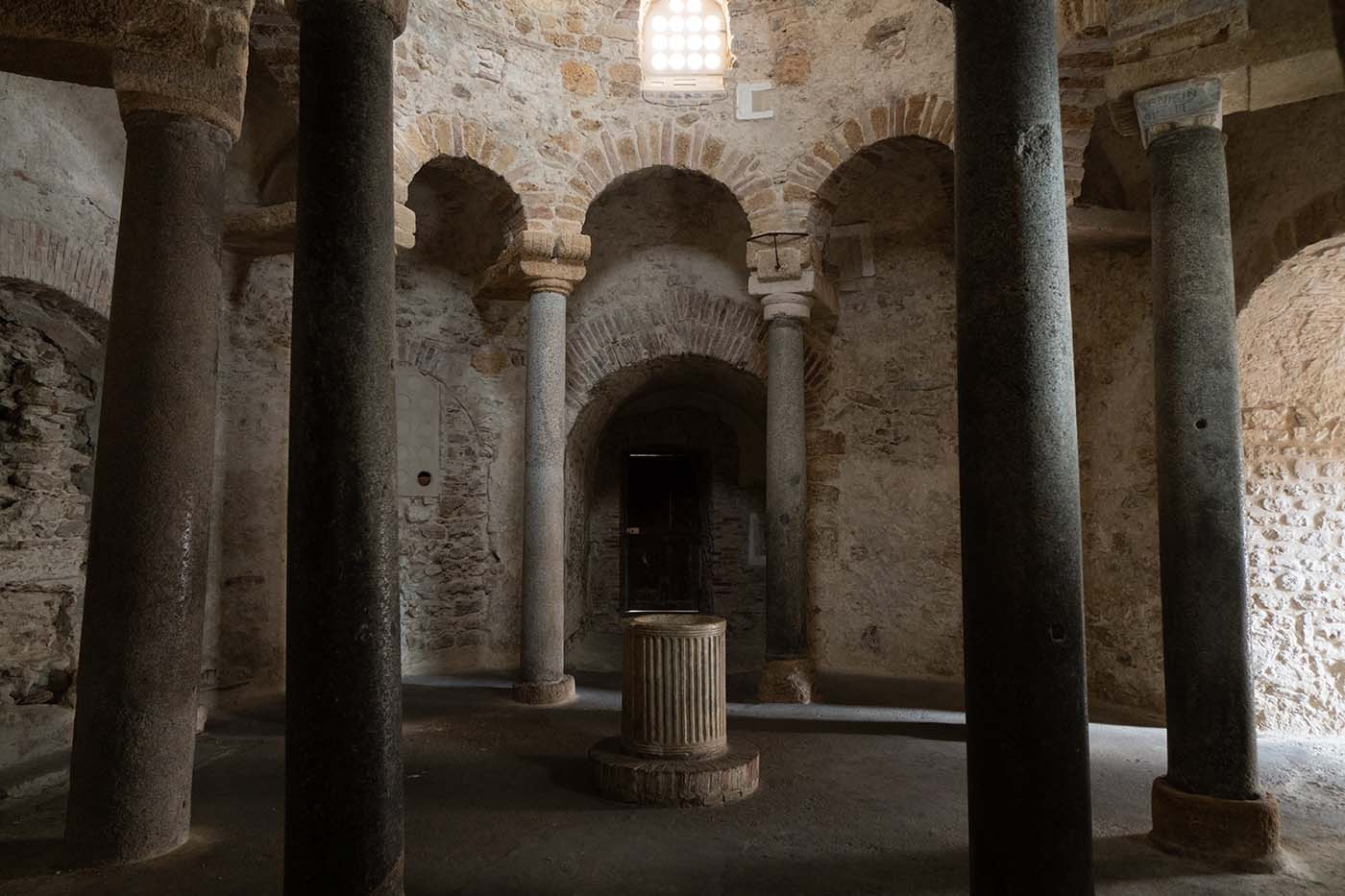
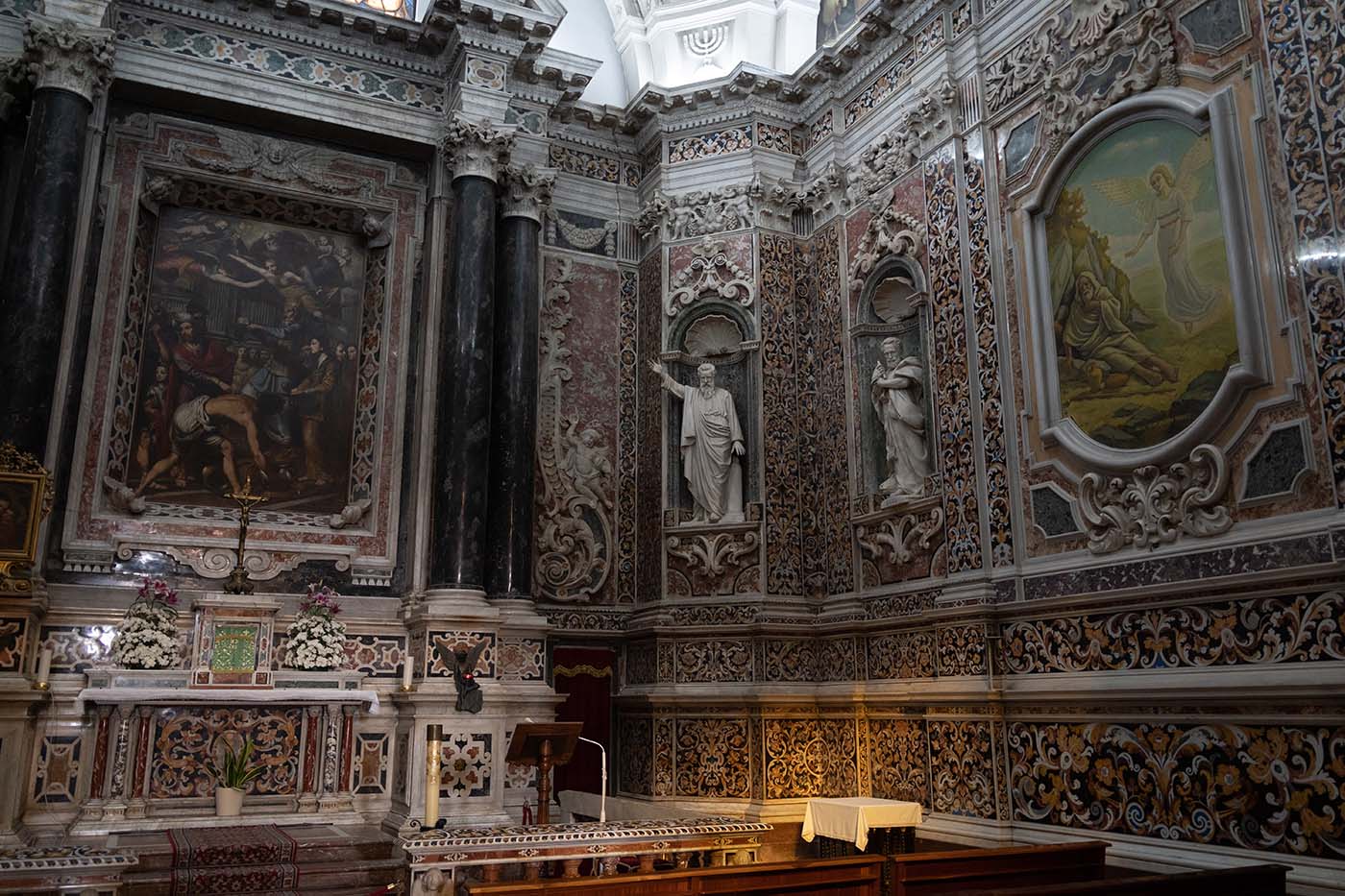
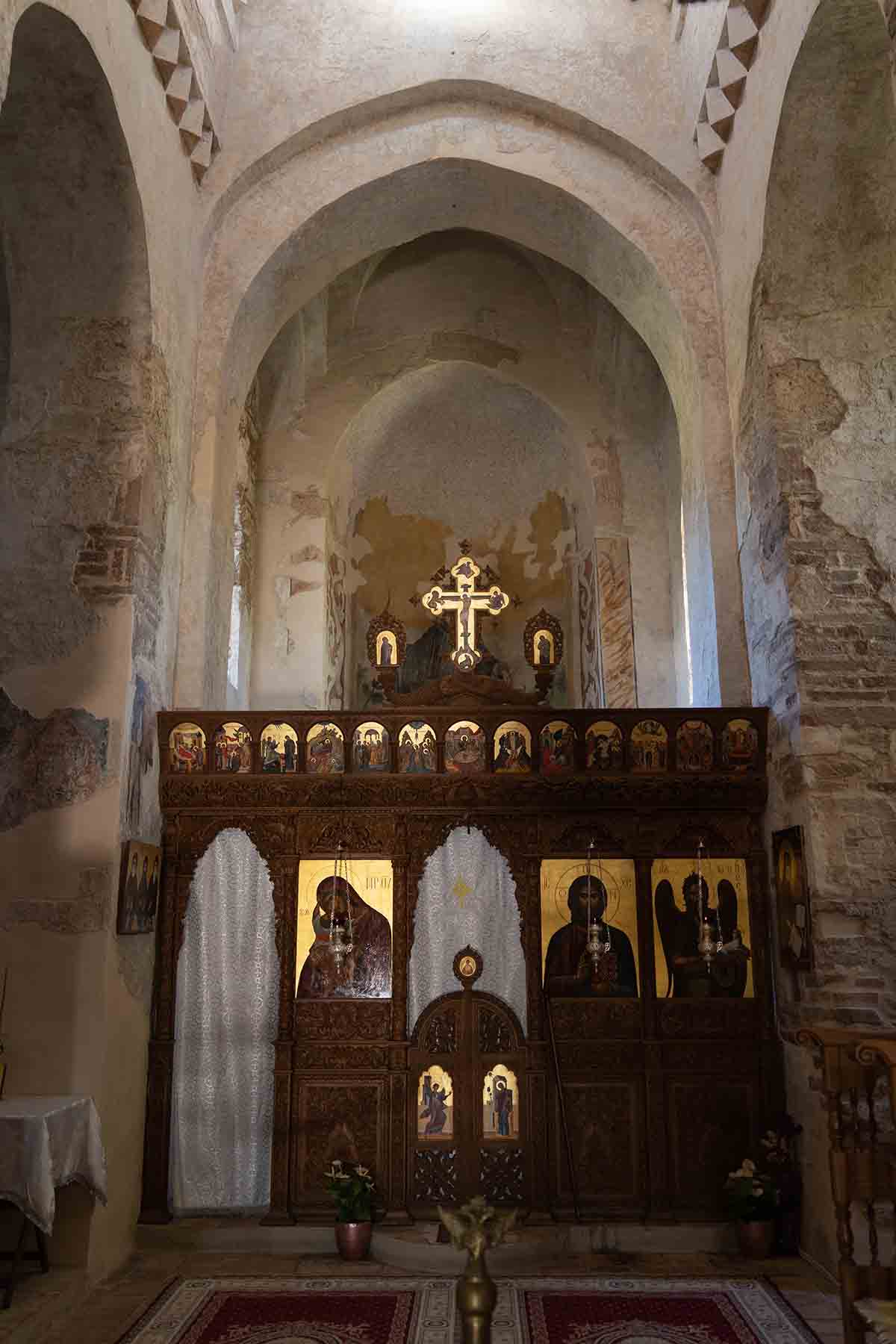
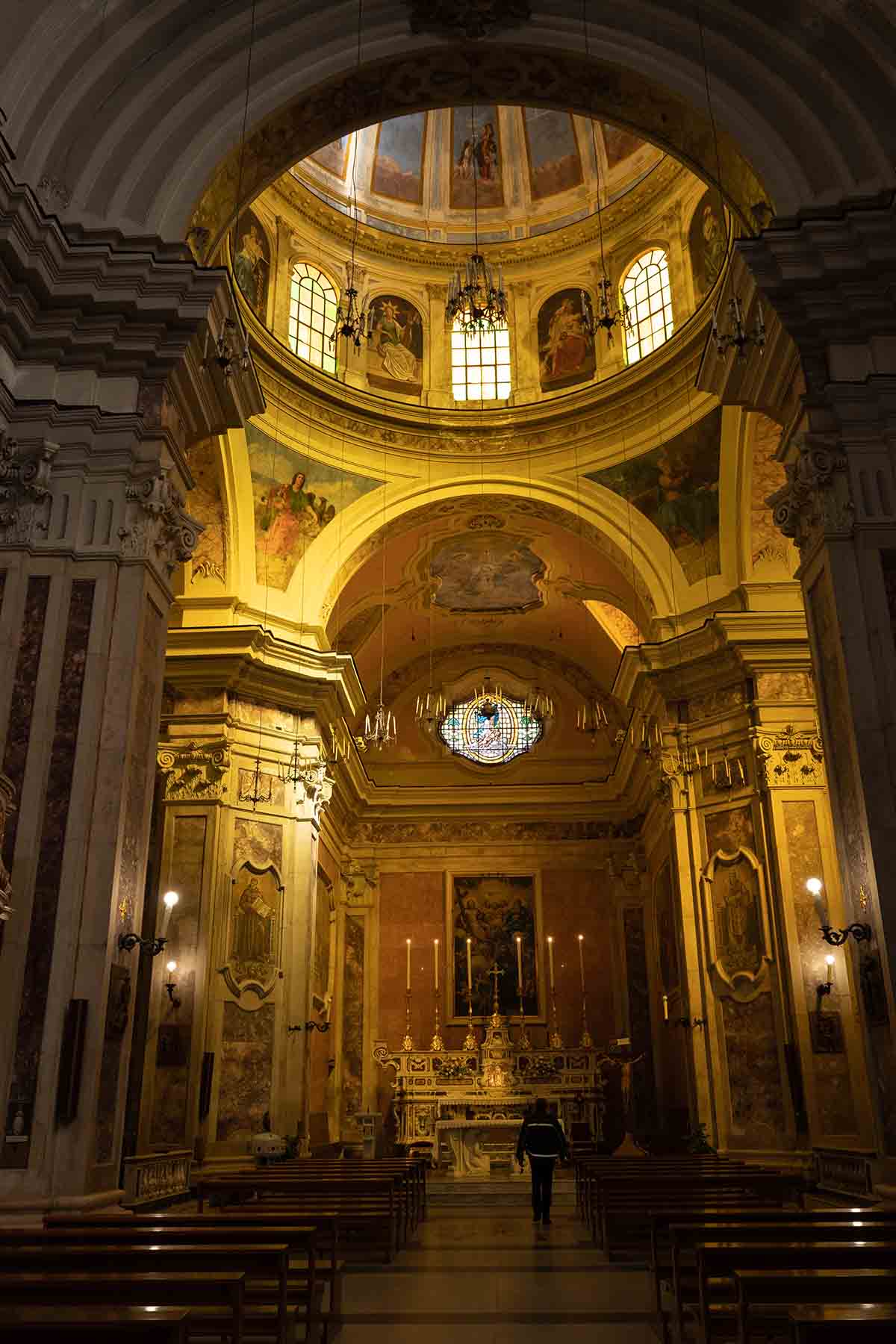
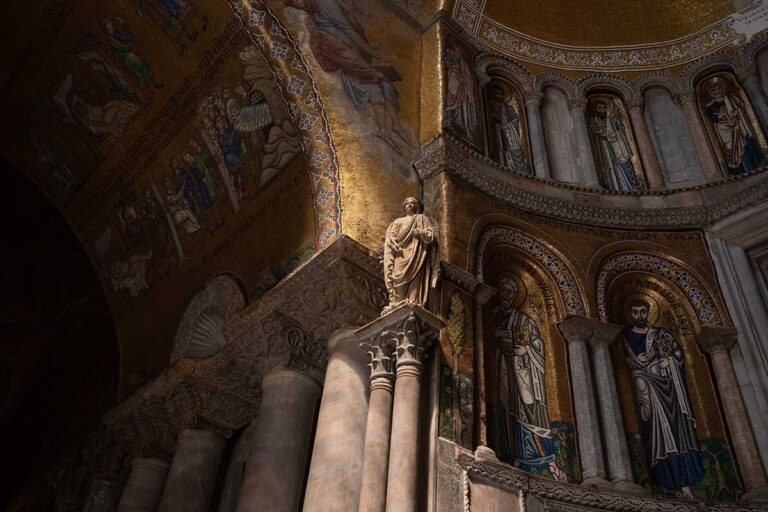
Hours before my return flight, I arrived at an appointment to glimpse a final set of spectacular Byzantine-era frescoes, these ones buried under a landslide for almost a thousand years, rediscovered by chance in 1874.
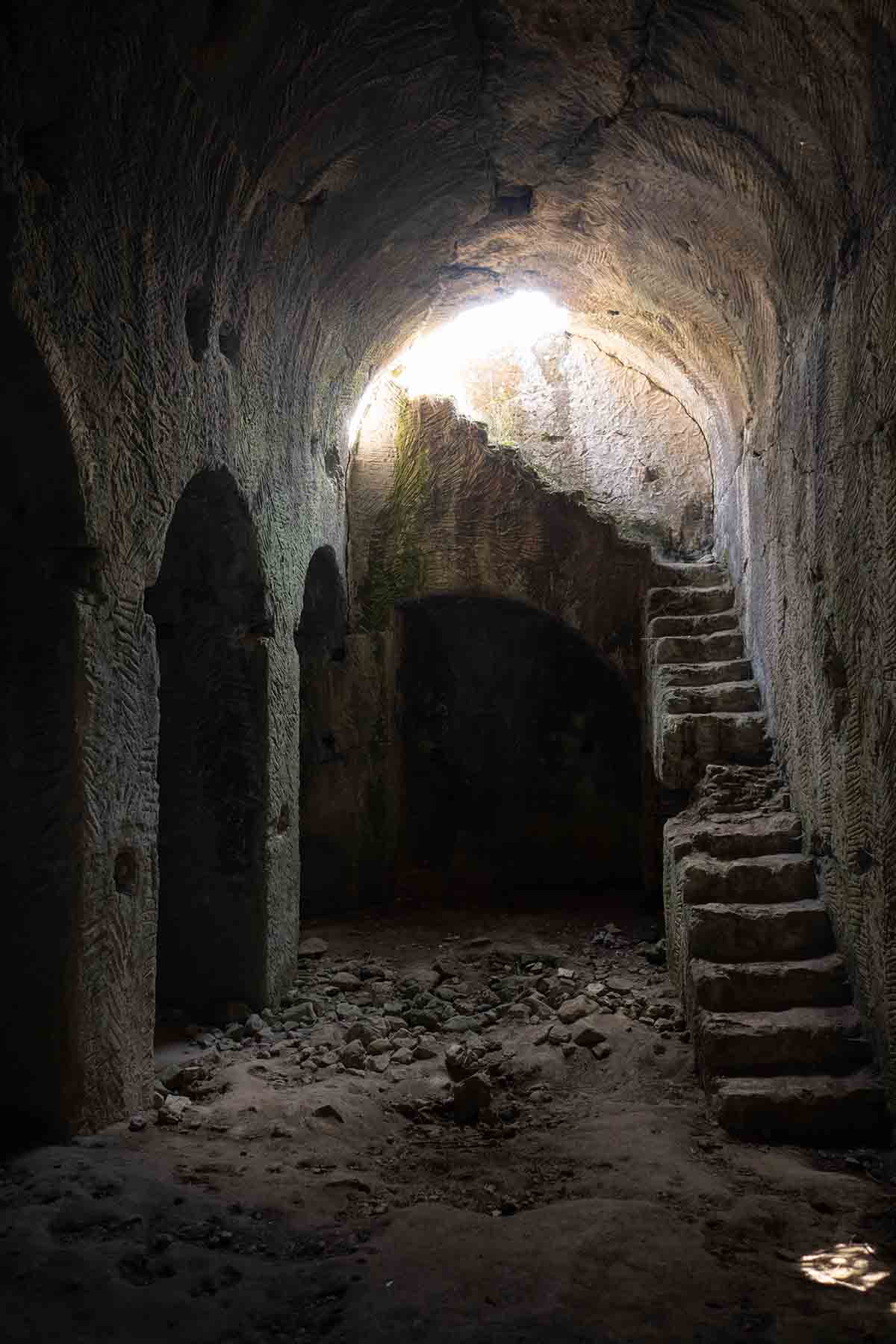
A group had gathered around the 19th-century church, and I assumed with some surprise that it was for the tour I’d scheduled. Just past the hour, an old man with the keys, a local Sottera volunteer, appeared, spotting the foreigner at once and explaining that he’d take me downstairs to the hypogeum very soon, just as soon as he’d finished up with his duties for mass. When these were completed, it was just he and I that descended the steps—a familiar sightseeing scenario here. At the bottom, he switched on the lights.
While I’d successfully made it to plenty of Byzantine sites, I’d failed at plenty others. In nearby Scalea, I’d climbed three times to wait on doorstep of the groundskeeper of an ancient church at the top of the medieval town, but no answer when I rang the bell. To be so remiss in appeciation for ancient treasures like these was something that struck me as apt for a place like Middle Egypt sooner than peninsular Italy. But this is Calabria.
The groundskeeper of the Chiesa di Sotterra introduced the frescoed lineup of saints in the church’s apse, then pointed to a niche in the wall that proved it wasn’t a church at first. That was for pagan offerings, he explained, and there’s more—there’s a Greek necropolis and two Roman villas beneath Sottera, toward the coast. So why aren’t they known? I asked, half-knowing the answer.
‘Siamo in Calabria.’ You should come back in summer, he went on, when the condensation on the walls brings out the reds and blues of the frescoes. He refused my offer of a tip for his time: You are welcome.
Buy the Book!
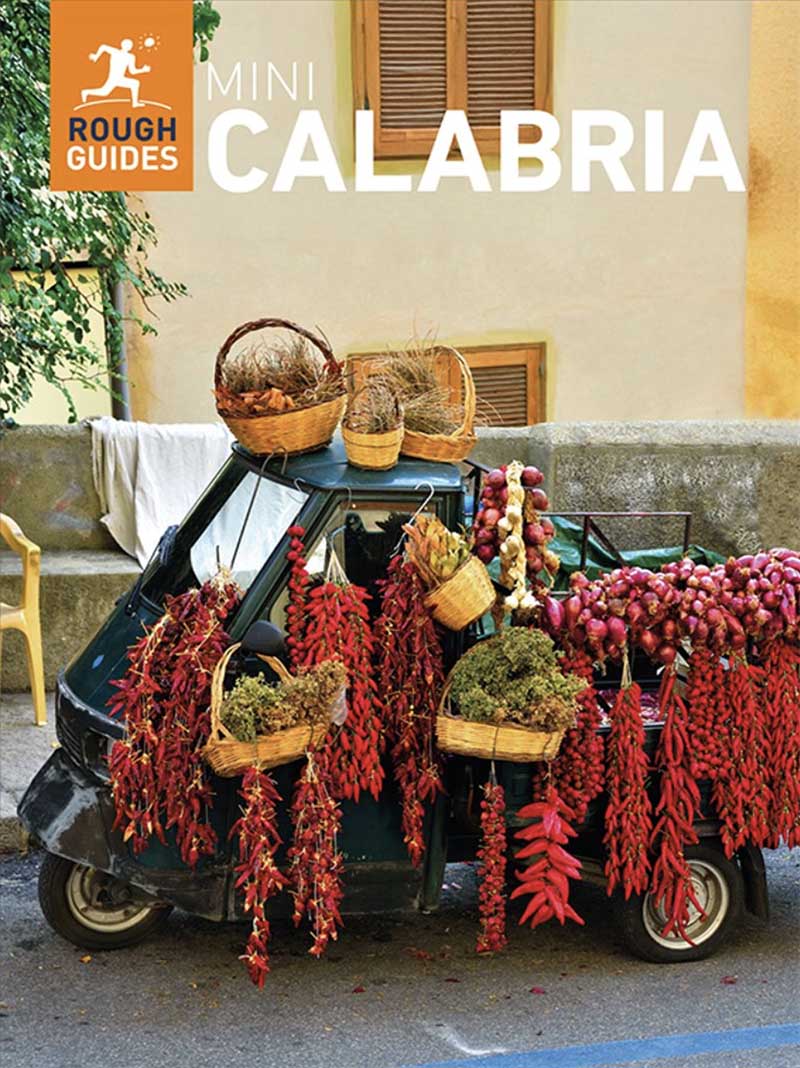
I intend to share much, much more from Calabria in the coming months—stay tuned! For now, I’ll share just another quick peek from the book. If interested, order a copy from roughguides.com and be sure to use the coupon code AUTHOR0040 for 30% off.
You are very welcome—enjoy!
Mountains and Coasts
“On the map, Calabria is routinely pointed out as the ‘toe’ of Italy’s geographical boot. But on closer inspection, Calabria itself is laid out in the shape of rather uncomfortable footwear: its topline drawn by the Basilicata border to the north, its smaller heel at Crotone, and the tip of its toe at Reggio Calabria, pointing, like the peninsula at large, across the Strait to Sicily. This boot-within-a-boot comprises a 250km strip of largely rugged terrain, a spine of successive ranges pinched to its narrowest point by the Gulfs of Sant’Eufemia and Squillace, the arch of the boot. Here, at the Isthmus of Catanzaro, the Italian peninsula is only 30km wide.
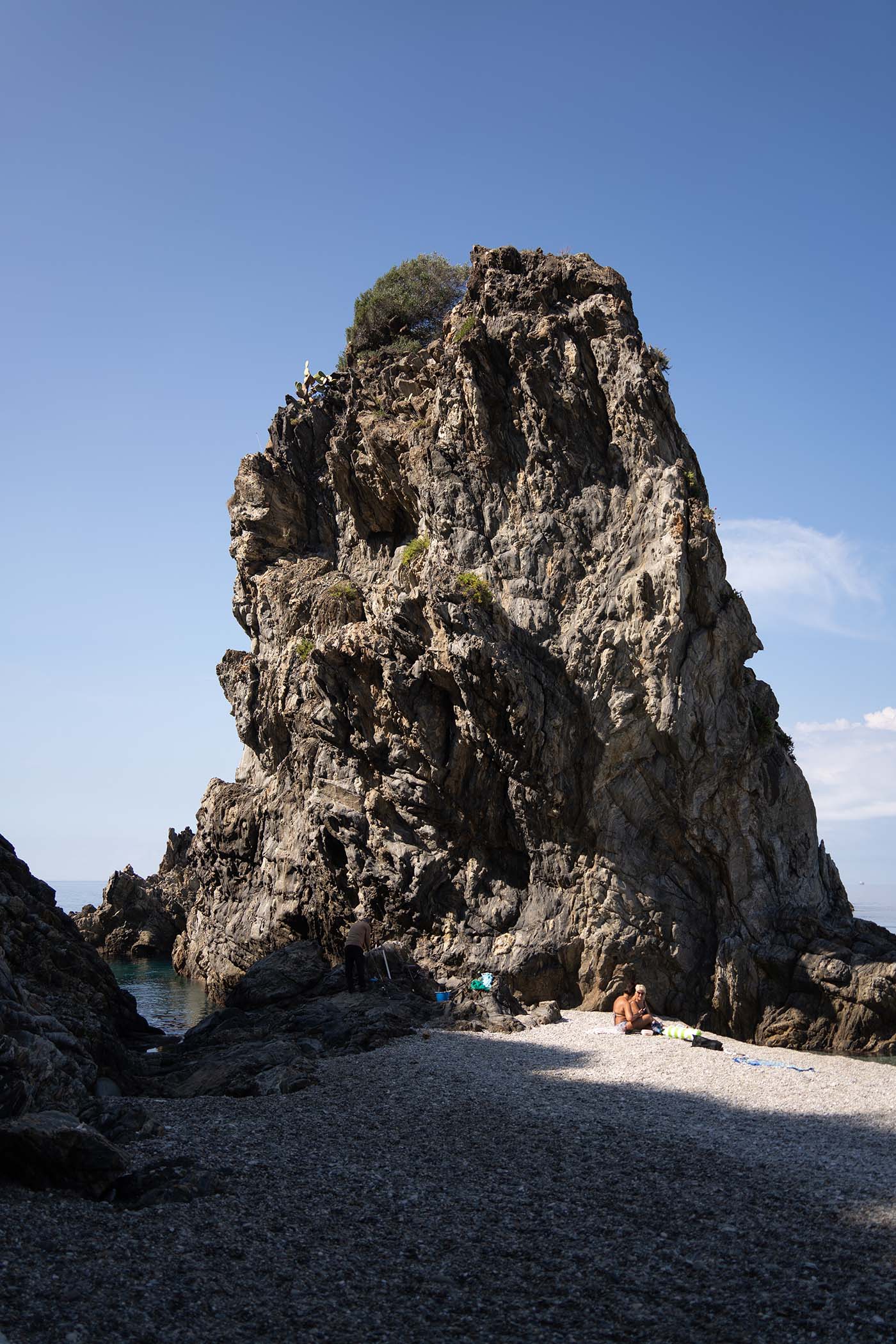
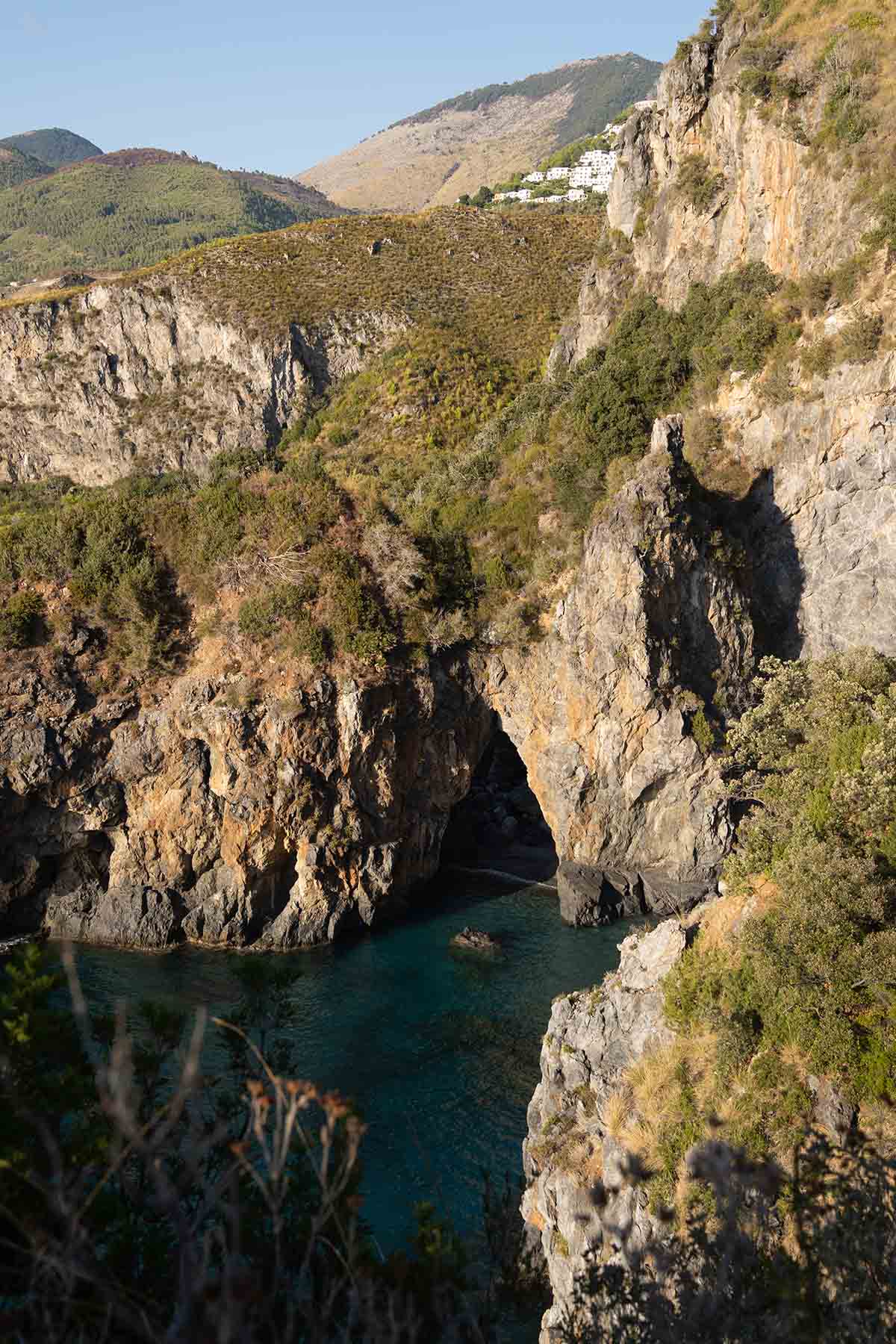
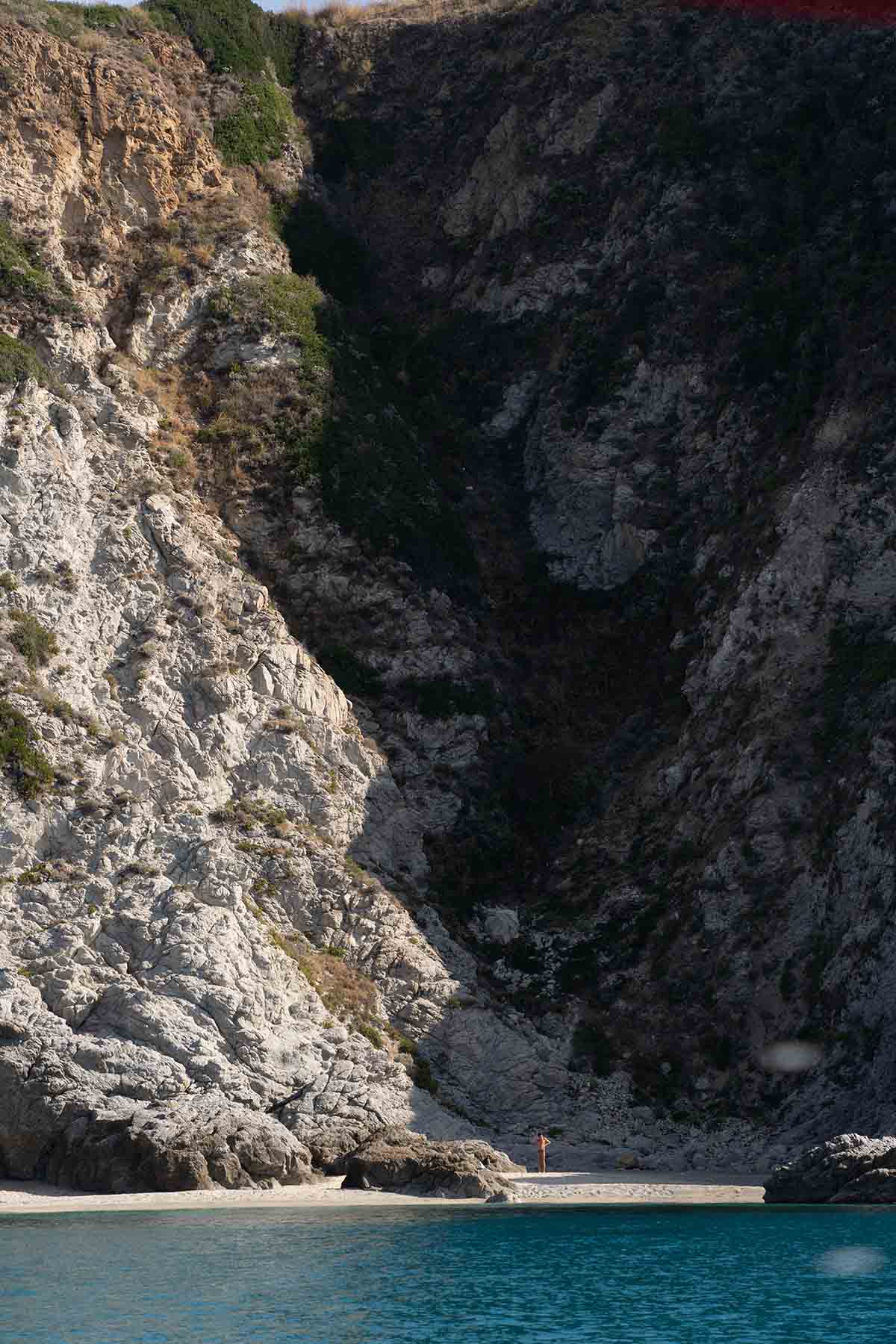
With over 700km of coast, Calabria alone accounts for nearly ten percent of the Italian peninsula’s shoreline, with the Tyrrhenian Sea to the west and Ionian to the east. Stretching north of Reggio from the Strait of Messina, the former is certainly the more dramatic of the two, encompassing spectacular stretches of cliffs and sparkling coves, interspersed with white-sand beaches: the Costa Viola (Violet Coast; home to Scilla, Bagnara and Palmi), the Costa degli Dei (Tropea, Capo Vaticano and Pizzo), and, abutting the Basilicata border, the Riviera dei Cedri (Diamante, Scalea and Praia a Mare). The gentler, less crowded Ionian coast begins south of the Strait, wrapping around to curve toward the Gulf of Taranto, dotted with laidback beachtowns of its own.
Calabria’s series of upland zones begins with the Pollino in the north, spilling over the Basilicata border. Technically the Apennines’ southernmost peg, this limestone range is carved by canyons like the Lao, containing Calabria’s highest peak, Serra Dolcedorme (2267m). Its slopes are sprinkled with twisted, ancient Loricato pines, while its valleys have been home for centuries to the Arbëreshë (Italo-Albanian) minority, which largely arrived in the late 15th century’s ‘exodus of terror’, fleeing Ottoman expansion.
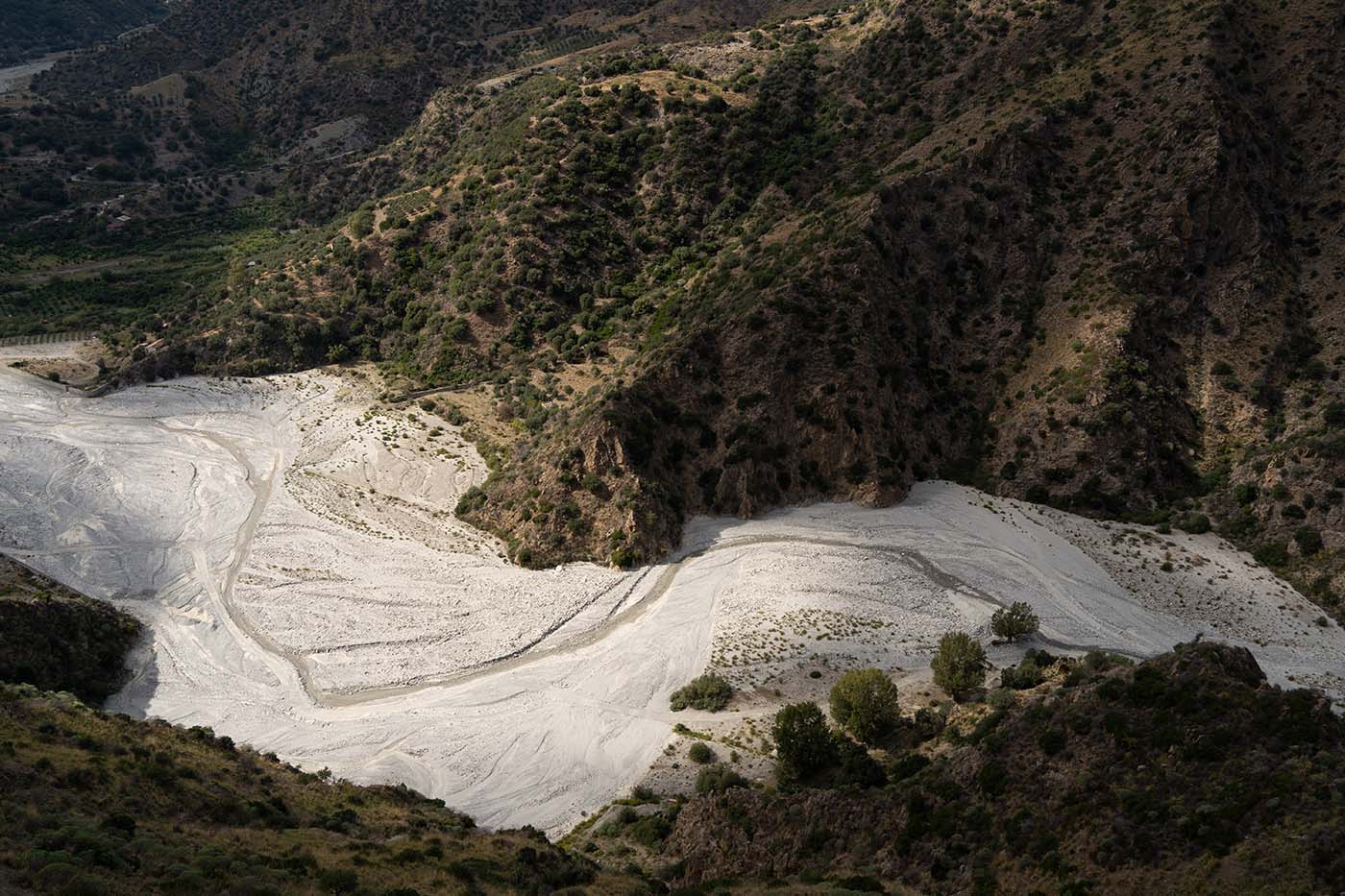
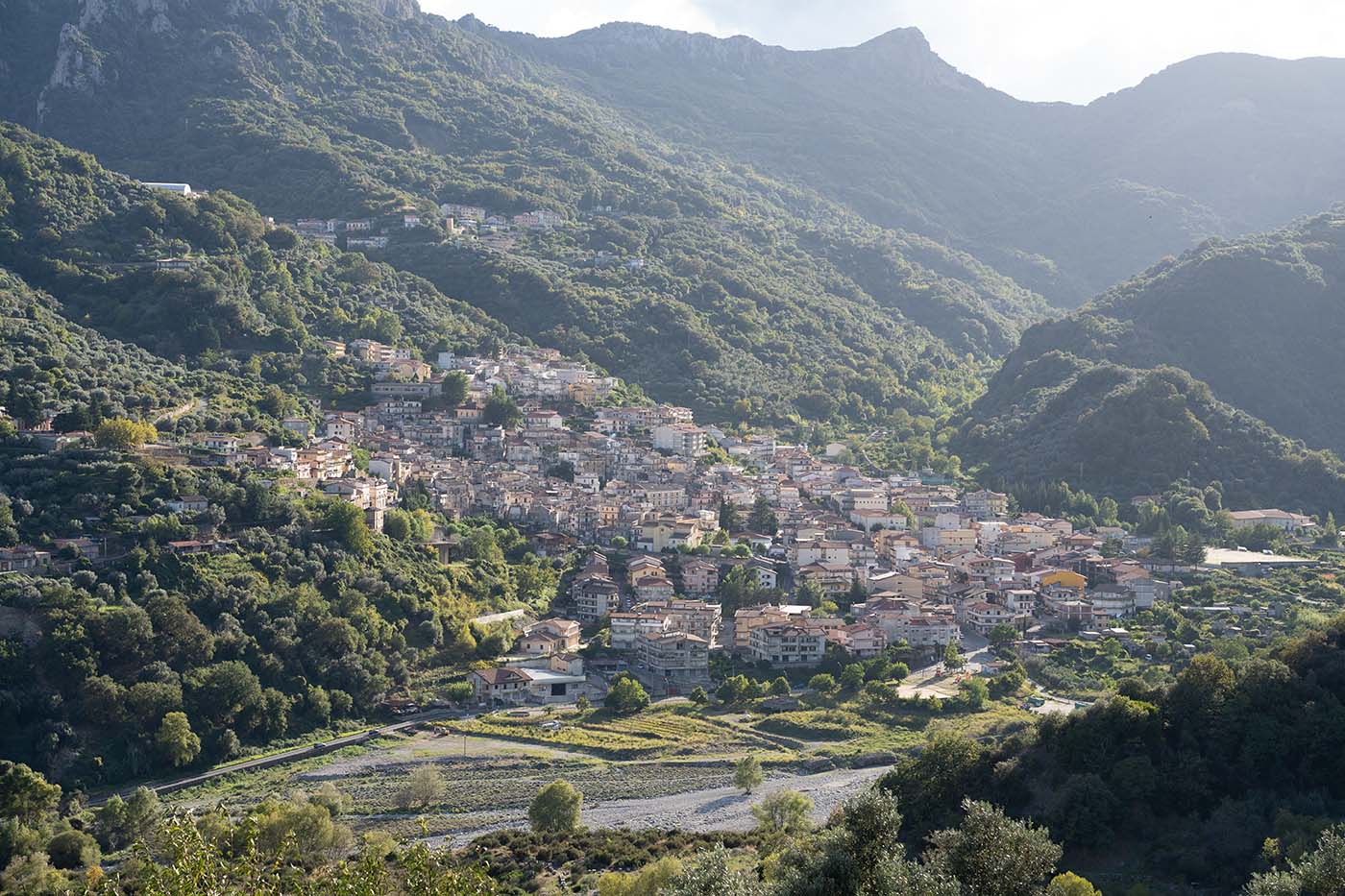
Calabria’s subsequent, crystalline ranges form the same chain that extends past the Strait to Sicily. The first begins to the south of the fertile Sibari Plain (of Sybaris fame): the storied Sila, whose endless timber supplied the fleets of both ancient Greece and Rome, a giant, granitic tableland of pines, pretty lakes and, in winter, ski slopes. These uplands form Calabria’s swollen ankle, the widest the region gets. But even here, at the Sila’s innermost heart, the medieval abbey of San Giovanni in Fiore, you’re never more than 50km from the nearest coast. The Sila’s slopes taper off to the west toward the cultural capital Cosenza, to the east toward Crotone (ancient Kroton) and to the south to the administrative capital, Catanzaro, the city ‘between two seas’, overlooking the isthmus and next range of mountains to rise to the south: the Serre Calabresi, smothered in chestnut and beechwoods and anchored by the rustic retreat of Serra San Bruno. These mountains build toward Calabria’s southernmost range, the Aspromonte, which cap Calabria’s toe, rising high over the city of Reggio and the Strait of Messina to the west. This final flourish of gneiss and schist is especially wild and rugged, cut in rainy periods by torrents, parched bone dry during long summer months. Magnificent vistas from its uppermost reaches pierce through the thick cloak of beech and black pine to take in Mount Etna. Its southern stretch, Bovesia, is home to the (Griko-speaking) Grecanici, the last holdouts of Greek Calabria, still staunchly protecting their ancient ties to Magna Graecia after more than 2,000 years of conquests.”
History and Heritage
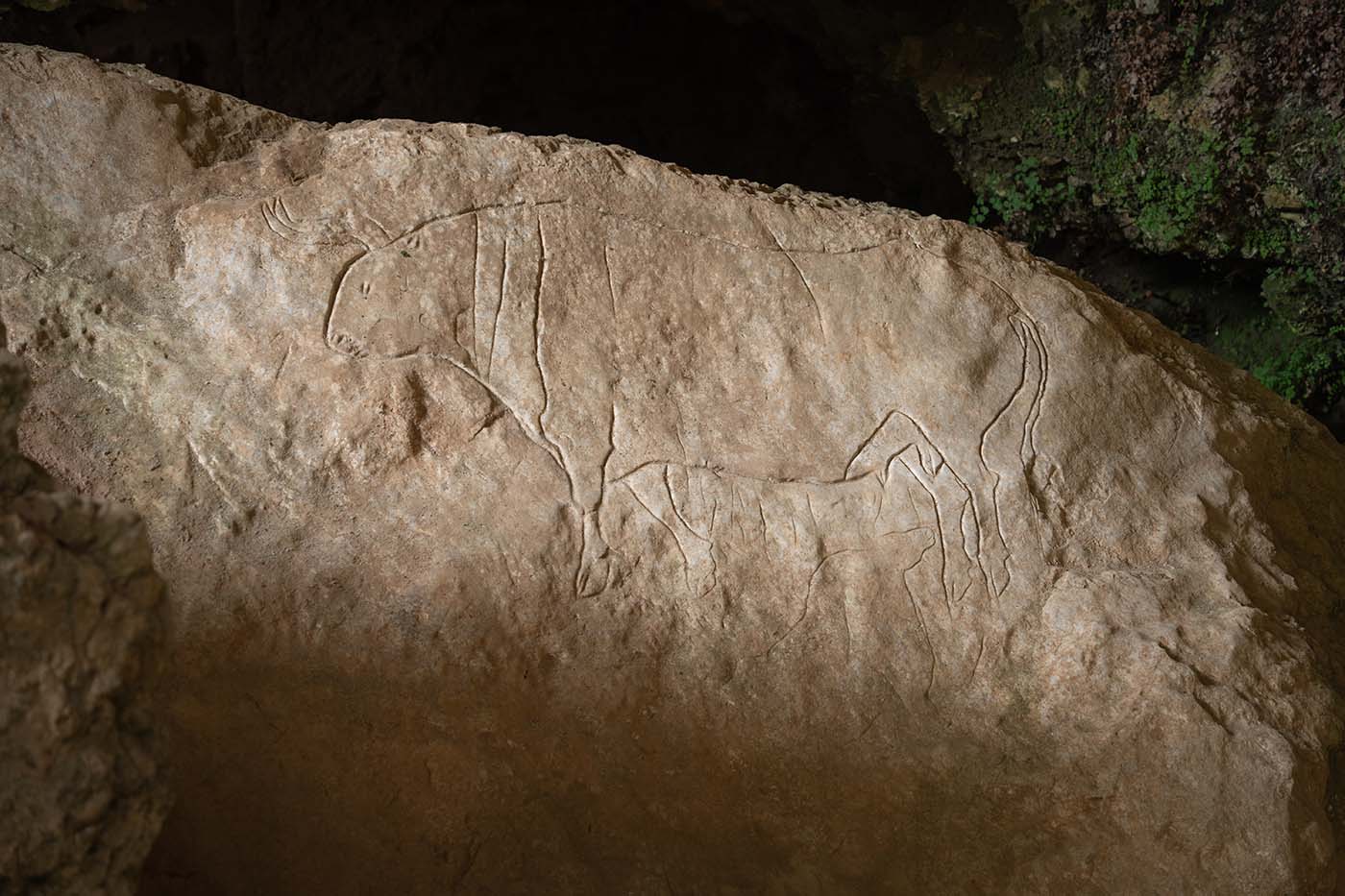
Reflecting a long human presence in Calabria, its earliest works of art are Paleolithic, most notably the sublime cave etchings of the Pollino’s Grotta del Romito. Beginning around 2,800 years ago, when Chalcidian Greeks established Rhegion (today’s Reggio Calabria), the area became a heartland of Magna Graecia, giving rise to the opulence of Sybaris and the illustrious Pythagorean school at Kroton (modern Crotone). Long before the Romans came and conquered, here were Italy’s first so-called ‘Italians’, the Greek designation for an indigenous tribe, a name that would later spread northward to define the peninsula. Calabria’s ties to the Byzantine East remained firm for centuries after Rome’s fall, fostering an influx of Basilian monks to its mountains, eventually to establish great centres of learning. Thanks to their knowledge of Greek, Calabrian monks played a pivotal role in lighting the Renaissance spark. Medieval to early modern rulers—Normans, Swabians, Angevins, and Aragonese—sprinkled the region in cathedrals, castles, and watchtowers, battered by waves of corsair raids and terrible earthquakes (most notably in 1783 and 1908).
Centuries of misrule and neglect had left Calabria a malarial backwater by the early 20th century, substantially emptied by emigration before, between and after the World Wars. Its scale has been staggering: since Unification (1861), the diaspora’s population has come to dwarf that of Calabrians remaining at home in Calabria (currently 1.8 million). Post-war, infrastructural leaps and land reforms plus DDT and EU funds combined to transform the region, setting a new, upward trajectory. Despite the region’s relative dearth of lowland space, agriculture has remained an economic pillar. Challenges to persist include relative poverty and unemployment, plus the enduring risk of natural disaster and the enduring influence of the criminal ’Ndrangheta, still looming behind the scenes. Yet if any label can aptly apply to Calabrians at large, ‘resilient’ would be a contender: a crop of social initiatives now fights corruption while traditional foods and crafts are vigorously revived, with Calabrian youth beginning to return after studies abroad to contribute to the uplift. Tourism, though fledgling, is helping too to drive interest in protecting a singular assortment of heritage.
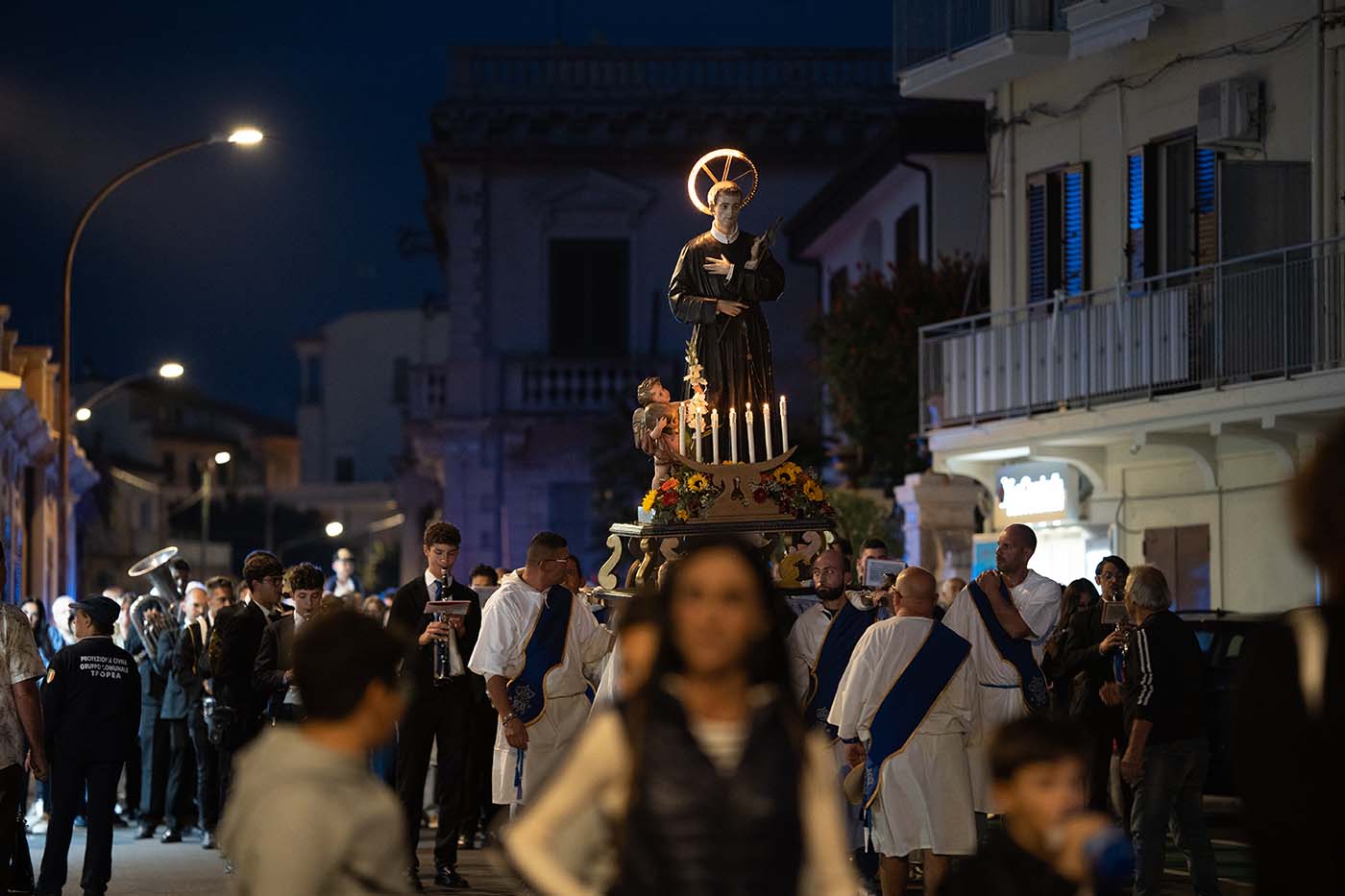
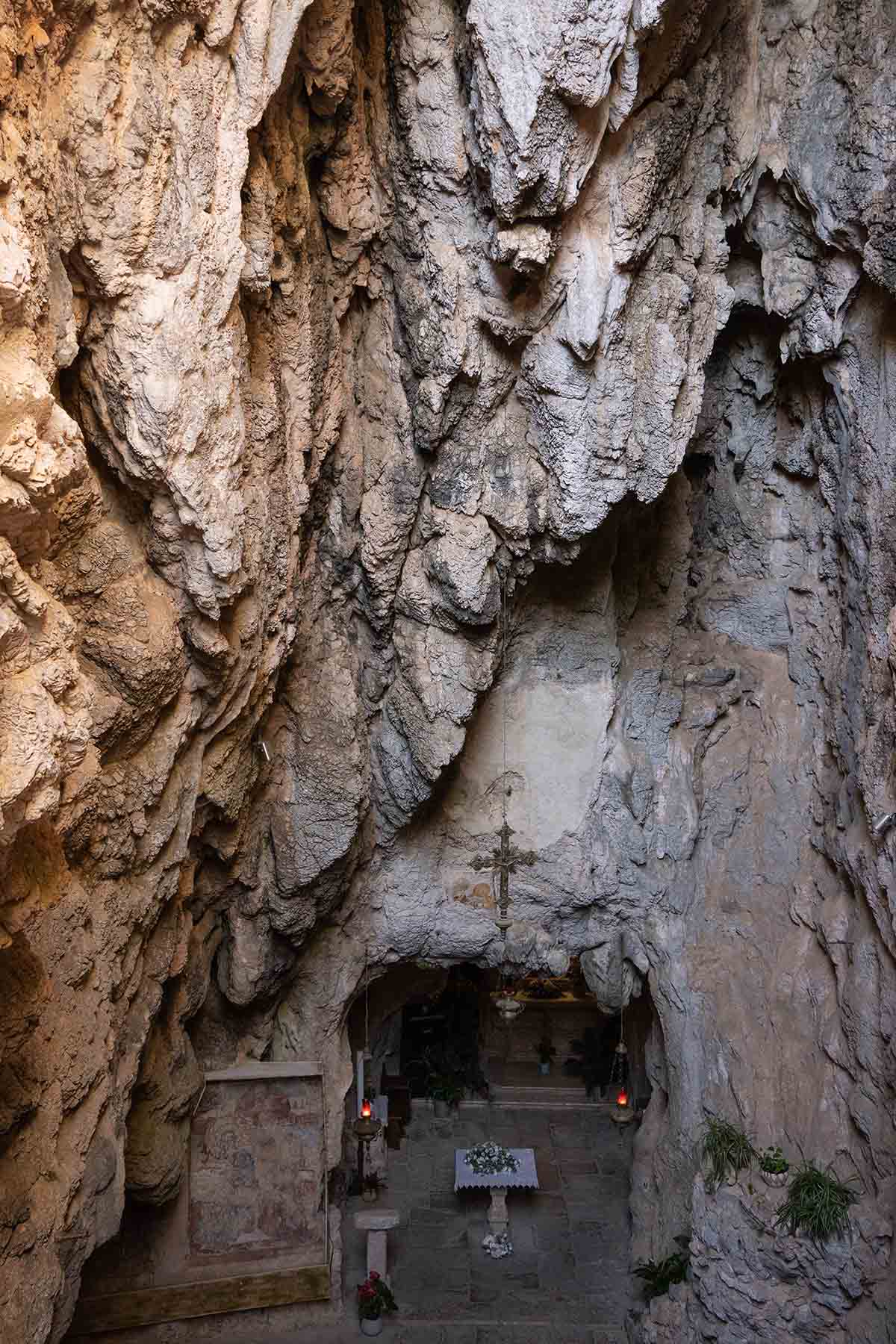
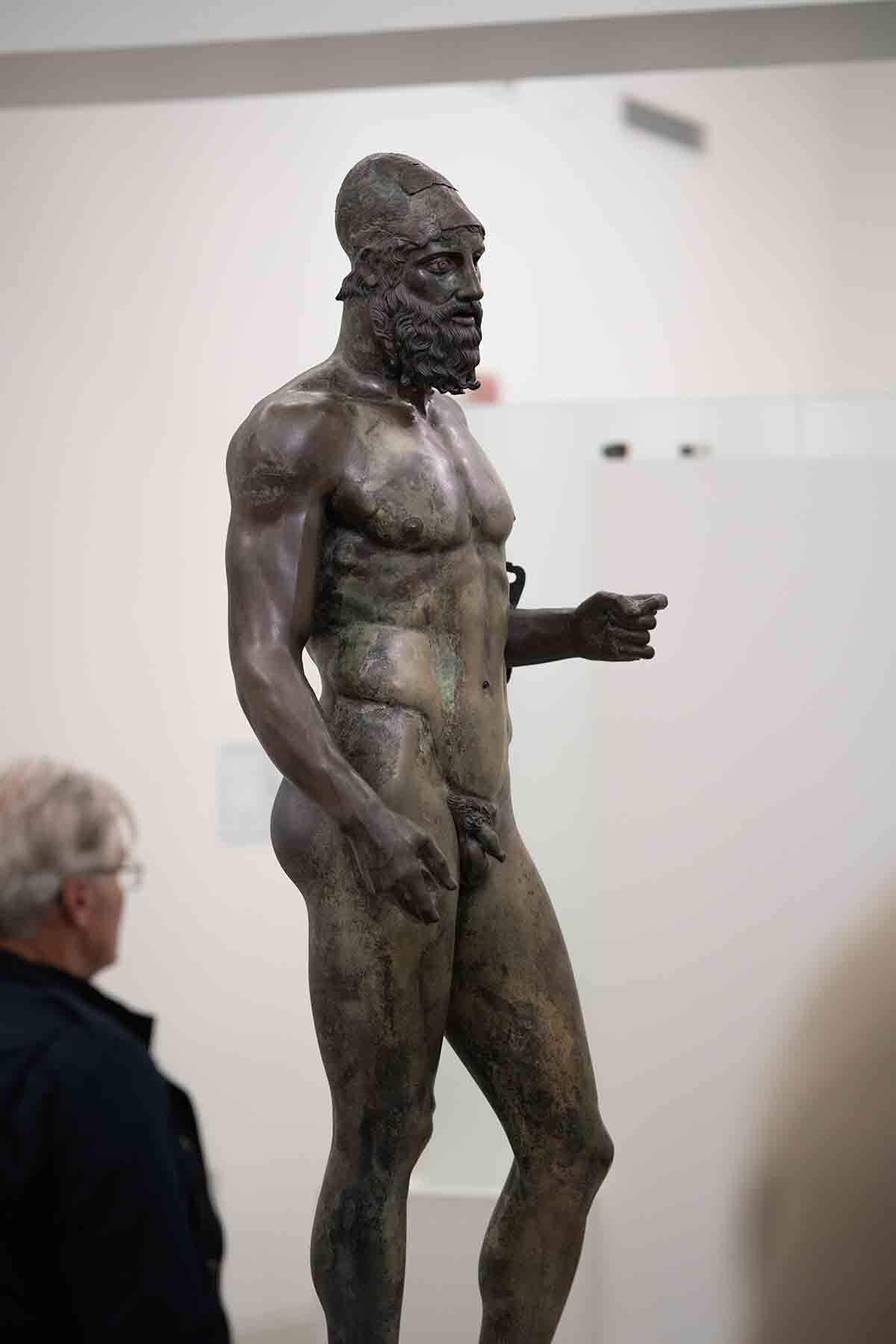
Calabria’s postcard-perfect Tyrrhenian resorts – Scilla, Tropea, Pizzo, Scalea – are already favourite hideaway resorts for discerning Italian and foreign visitors alike. Yet beyond these hotspots, the visitor to Calabria will find a region virtually untouched by the tourism that has entrenched itself and enriched Calabria’s neighbours in Sicily and Campania. Inevitably, word will spread on the immensity of the region’s treasures: natural, historical, cultural and spiritual. There’s the mountain grandeur of the Pollino, Sila and Aspromonte, each well protected as a national park. There’s the scattered ruins of Magna Graecia, lying undisturbed in well-kept, archeological zones, while the heights of their civilizational grace are embodied in Reggio’s majestic Riace Bronzes. There are the Byzantine glories of Rossano and Stilo, the historic cathedrals of Cosenza, Altomonte and Gerace, adorned with capitals and columns scavenged from the ancient sites. There are the mountainside sanctuaries of Polsi, Cerchiara and Paola; the remote refuges of Basilian, Florensian and Carthusian monks; the eye-popping pomp of the Varia di Palmi; the sagre (food festivals) of Spilinga and Diamante. There are the Apstromonte’s haunting ghost towns, perched high over bleached-white, snaking fiumare, and no less than 16 Calabrian representatives on the list of ‘I Borghi Più Belli d’Italia’ (‘Italy’s Most Beautiful Villages’). However well connected Calabria has become, in just one visit, you’ll hardly scratch the surface.”